
The first mistake in Tbilisi? Ordering at random. The menus are long, the names don’t translate cleanly, and everything sounds intriguing. So you point. You gamble.
Sometimes you win. Sometimes you end up with something decent while the table next to you is clearly having a better night.
This fixes that. If you only have space for a handful of dishes here, make them count.
1. Khinkali — The One You Don’t Skip
If you try one dish in Tbilisi, make it khinkali.
They look harmless. Twisted dumplings with a pleated top knot. But inside — that’s the whole game.
Hot broth pooled around seasoned meat, steam trapped in thin dough. When it’s done right, the first bite releases heat and flavor at once. You feel it.
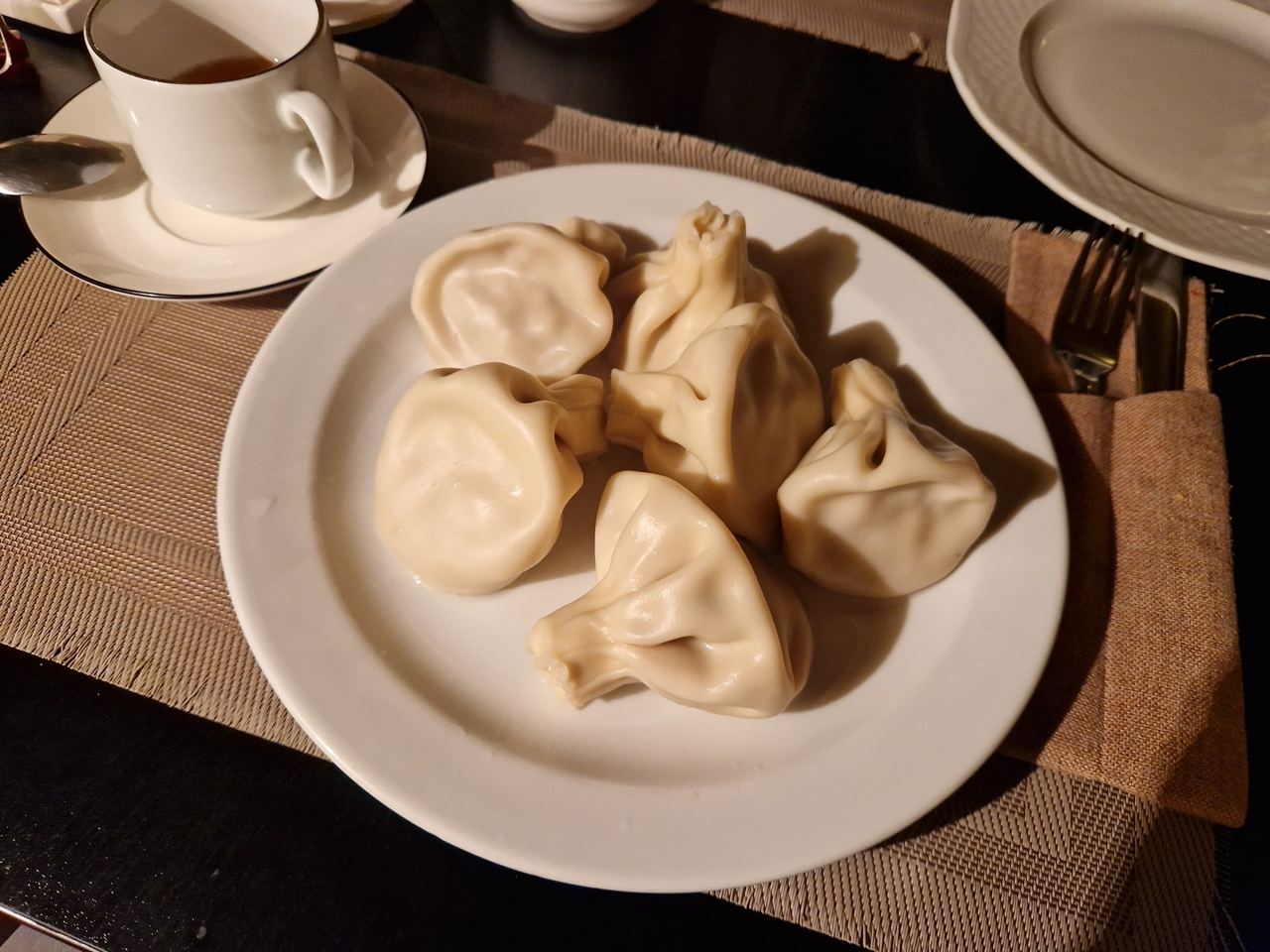
There’s a method.
You grab it by the knot. Bite a small opening. Sip the broth first. Then go in. The thick top stays on the plate. That’s normal.
If someone eats the whole thing including the knot, fine… but locals usually don’t.
Common fillings
- Beef & pork mix — the classic
- Lamb — deeper, slightly wild
- Cheese or mushroom — solid vegetarian options
Cutting them open with a knife? You can. Should you? I wouldn’t.
2. Khachapuri — It’s More Than Cheese Bread
Calling khachapuri “cheese bread” is lazy. That’s like calling espresso “hot water with beans.”
The everyday version in Tbilisi is Imeretian khachapuri. Round. Sealed. Filled with salty local cheese that melts but holds structure.
It’s balanced — rich but not overwhelming. You can eat a whole one and still walk afterward.
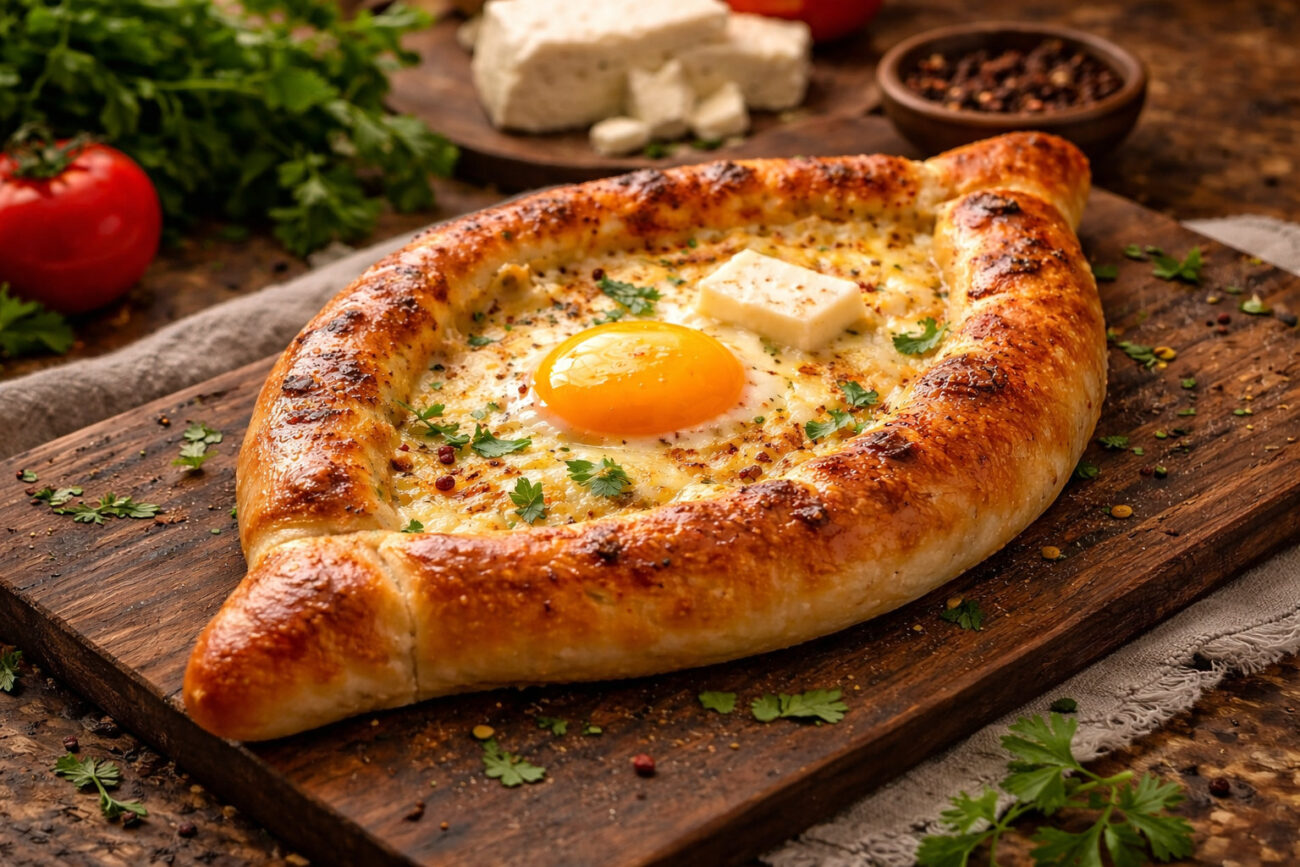
Then there’s Adjarian khachapuri, the dramatic cousin. Boat-shaped. Egg cracked on top. Butter melting into molten cheese.
You stir it together and tear off pieces of bread to dip. It’s indulgent. It knows it.
If you pass a bakery window stacked with golden rounds, don’t overthink it. Fresh matters here. Timing matters.
3. Pkhali — Where Walnuts Take Over
You’ll notice quickly: walnuts are everywhere. Not as garnish. As backbone.
Pkhali makes that obvious. Usually spinach, beetroot, or eggplant blended with ground walnuts, garlic, vinegar, herbs.
Formed into small mounds, dotted with pomegranate seeds. It’s served cold. Tangy. Earthy.
At first glance it looks like a side. It isn’t. It’s foundational. It explains how Georgian cuisine builds depth without relying on heat.
More layering, less burn.
Vegetarian? You’re fine. Honestly, you’re spoiled here.
4. Lobio — Beans, But Not Boring
Lobio translates to beans. That doesn’t do it justice.
Red kidney beans slow-cooked with onion, herbs, spices, sometimes a smoky edge.
Served in a small clay pot that keeps everything warm longer than you expect. It’s dense. Comforting. Quietly powerful.
Usually it arrives with
- Pickled vegetables
- Mchadi (cornbread)
- Fresh herbs on the side
It’s not flashy food. No spectacle. But on a cool evening, with a glass of Saperavi nearby, it just makes sense.
5. Churchkhela — The Snack That Looks Like a Candle
You’ll see them hanging in rows — long, glossy, almost wax-like.
Churchkhela is walnuts or hazelnuts threaded on string, dipped repeatedly into thickened grape juice (tatara), then left to dry.
The result is chewy, slightly sweet, faintly tart. More substantial than you expect.
It used to be travel food. Energy in portable form. You could carry it for days.
Fresh ones are softer. Older ones firm up. Both are good. Different moods.
If you need something to snack on between wine bars or museums, this is the move.
6. Chakapuli — Spring in a Bowl
If you’re in Tbilisi in late spring and you see chakapuli on the menu, just order it. Don’t debate. Don’t scroll further.
This is lamb simmered with tarragon, green onions, garlic, and a splash of white wine.
The flavor leans bright, herbal, slightly sharp — nothing like heavy winter stews that sit in your stomach for hours.
When it’s right, it tastes like someone walked through a fresh herb market, grabbed everything green, and built a meal around it.
Season matters here. Outside spring, it can lose its edge. The herbs dull. The magic softens. When it’s in season though… it feels alive.
7. Ojakhuri — The Reliable Classic
Ojakhuri is the dependable order. The one you choose when you don’t want surprises but still want something local.
Pan-fried pork. Potatoes. Onions. Herbs. Served hot, usually still sizzling.
No dramatic plating. No theatrical sauce swirl. It’s straightforward and honest — the kind of plate locals reach for after work.
The only risk is dryness. If the pork overcooks, the whole thing collapses into mediocrity.
When it’s juicy and seasoned properly, though, it hits hard. Especially after a long day walking uphill through Old Town streets.
8. Mtsvadi — Georgian Barbecue Done Properly
This is not sticky-sauce barbecue. Forget that image.
Mtsvadi is meat cut into serious chunks, grilled over hot coals.
The flavor comes from smoke, heat, and the quality of the pork or beef — not marinades trying to cover shortcuts.
If the meat is good, it doesn’t need disguise.
You’ll usually get it with
- lavash or fresh bread
- raw sliced onions
- tkemali — tart plum sauce that wakes everything up
If you want a single dish that explains why Georgians treat meat like religion, this is the one.
9. Satsivi — Walnut Sauce at Full Power
Satsivi doesn’t ease you in. It commits.
Cold chicken wrapped in a thick walnut-garlic sauce spiked with warm spices.
The texture surprises people expecting something lighter. It’s dense. Rich. Deeply savory. You don’t nibble this absentmindedly.
You’ll see it more often in winter or during holiday spreads, but plenty of traditional kitchens keep it year-round.
If walnuts are the backbone of Georgian cuisine, satsivi is the loudest argument.
10. Badrijani Nigvzit — Eggplant Rolls with Walnut Filling
Badrijani nigvzit looks almost too simple.
Thin slices of fried eggplant wrapped around walnut paste blended with garlic and herbs, finished with pomegranate seeds on top.
Creamy, savory, slightly tangy — and dangerously easy to keep eating even when you swear you’re full.
This works as
- a starter
- a shareable dish for the table
- a strong vegetarian option that doesn’t feel like an afterthought
If you want something traditional but immediately approachable, this is it. No explanation needed.
That’s the full top ten. Next up, we get practical — what to drink alongside these dishes, how to order without guessing wrong, and the tiny etiquette moves that make dining in Tbilisi smoother.
Pros: How to order like you mean it
- Fast wins: khinkali + pkhali + one grilled plate covers 80% of “first time in Tbilisi” success.
- Vegetarians aren’t punished: walnuts, beans, eggplant, herbs — real plates, not side-salad energy.
- House wine is often legit: you can drink well without playing sommelier.
- Sharing is the default: it’s hard to order “wrong” when everything lands in the center.
Cons: Mistakes that ruin the table
- Over-ordering happens fast: bread arrives, portions are heavy, and suddenly you’re trapped.
- Khinkali has a learning curve: bite wrong and you lose the broth (and the point).
- Tourist menus get softened: less garlic, weaker seasoning, prettier plating — flatter food.
- Walnut-heavy dishes divide people: satsivi and pkhali are love-it-or-not territory.
What to Drink in Tbilisi (And What to Pair It With)
Food here never floats alone. It leans on what’s in your glass.
Georgian cuisine was built around wine culture — clay qvevri buried underground, family cellars, backyard harvests — so skipping the drink part feels… incomplete.
You don’t need to memorize tasting notes. Just know what plays well with what. The rest sorts itself out.
Georgian Wine — Start Here
Forget intimidating wine talk. You need a few anchors, that’s it.
- Saperavi — deep red, structured, a little brooding. Perfect with mtsvadi, ojakhuri, grilled meat, anything smoky or fatty.
- Rkatsiteli — bright white, or amber if fermented on skins. Clean edge. Works beautifully with pkhali, lobio, lighter vegetable dishes.
- Amber wine (often called “orange”) — white grapes fermented with skin contact in qvevri. Tannic, faintly tea-like, slightly wild. Shockingly good with walnut-heavy plates.
If you freeze up reading the list, just ask for house wine. In many traditional restaurants, house wine is legit — simple, balanced, affordable.
No performance. No lecture.
Wine here isn’t precious. It’s normal. Someone’s uncle probably made it.
Chacha — The Strong One
Chacha is grape pomace brandy. Usually 50–65% ABV. Yes, really.
It doesn’t behave like a sweet digestif. It’s sharp. Clean. Direct. Often homemade.
Served at the end of a meal in traditional spots, sometimes poured with a grin that suggests you’re about to understand something about Georgian hospitality the hard way.
If someone offers you a shot, it’s not a dare — it’s welcome.
You don’t have to slam it. Honestly, I think it’s better not to. Small sip. Feel the heat climb. Let it pass.
Then water. You’ll want water.
Local Lemonade (Lagidze Waters)
Not drinking? You’re still fine.
Lagidze Waters are old-school Georgian lemonades made from flavored syrups mixed with sparkling water.
You’ll see them in cafes and casual restaurants, sometimes poured from glass dispensers that look straight out of another decade.
Flavors usually include
- Tarragon
- Pear
- Cream soda
Tarragon tastes green and herbal. Pear is mellow. Cream soda feels nostalgic in a weird way.
Sweet, yes, but they cut through salty dishes like khachapuri better than you’d expect. Something about the carbonation resets your mouth.
And no one looks at you sideways for skipping alcohol. It’s normal.
How to Order Without Overdoing It
Georgian meals are built for the table, not the individual.
The classic visitor mistake? One dish per person. Sounds logical. It’s wrong.
Plates here are generous. Heavy. Designed to overlap flavors.
Smarter approach
- Start with 2–3 dishes for two people
- Put everything in the center
- Order more only if you’re genuinely still hungry
Khachapuri fills fast. Ojakhuri looks manageable until it lands. Even pkhali, which seems light, adds up once you’re scooping it with bread.
And bread almost always arrives automatically. You didn’t order it. It’s just there. Factor that into your hunger math.
Dining Etiquette You Should Know
Nothing stiff. No rulebook. But rhythm matters.
- Toasts are real. If someone raises a glass, let them finish speaking. Drinking mid-toast feels off.
- Meals take time. Servers won’t rush you out. Tables turn slowly in traditional restaurants.
- Leftovers are fine. Ask to pack food. No drama.
- Tipping: Around 10% if service isn’t already included.
There’s no rigid ceremony. It’s more about flow — conversation, shared plates, refilling glasses, pausing, continuing.
Once you stop trying to control the pace, it settles into something comfortable.
Now you’ve got the food and drink side mapped out. Next comes the practical layer — neighborhoods worth targeting, rough price ranges, and the questions travelers keep asking after their first proper supra-style meal.
Where to Taste It Properly (Not Just Anywhere)
Not every kitchen treats these dishes with respect. Some do the bare minimum, plate it nicely, and hope you’re too distracted by the balcony view to notice the flavors got sanded down.
Old Town is a mixed bag. You’ll find convenience, vibe, live music drifting out of doorways… and also places cooking for an imaginary visitor who’s scared of garlic and thinks cilantro is “exotic.”
Sometimes it’s fantastic. Sometimes it’s a soft, tourist-friendly version of Georgian food that feels like it’s been put through a filter.
Head out into neighborhoods like Vera and Sololaki and things get more grounded. Smaller dining rooms. Shorter menus. Less laminated-photo energy.
In the so-called Bohemian district you’ll also see modern places doing their thing — some are great, some are trying too hard, and you can feel it.
A few blunt tells
If you want strong khinkali, go where locals are eating them fast and in volume. You want high turnover. Steam. Noise. People not taking photos.
If you want proper pkhali and satsivi, lean traditional. The classic spots tend to get the walnut paste right, the herb balance right, the texture… right.
If you want mtsvadi, follow the smoke — literally. When you smell charcoal, you’re getting warmer.
Simple rule: busy with locals beats empty with views. Every time.
What a Full Georgian Table Actually Looks Like
Ordering here isn’t linear. It stacks.
You don’t “pick a main.” You build a table like you’re building a playlist: something warm, something cold, something smoky, something rich, something sharp to cut through it all.
And then you keep adjusting. Someone says “one more salad,” someone else insists on beans, someone orders bread again because Georgian bread disappears like it has legs.
A proper table might include
- Khachapuri to start
- Two or three cold dishes (pkhali, badrijani)
- Lobio or another warm clay-pot dish
- Mtsvadi or ojakhuri as the anchor
- Wine on the side, never rushed
It arrives gradually. Nobody’s plating for individual ownership. Shared plates, shared forks, shared opinions.
You eat, pause, talk, pour, argue about which pkhali is best, eat again.
If the table looks polite and empty between courses, you ordered too cautiously. Or you picked a place that doesn’t understand the point.
How Much Does Food Cost in Tbilisi?
Compared to Western Europe, it feels affordable. Compared to local salaries, it’s not “cheap,” and anyone telling you it is… yeah, they’re just doing the travel-blog thing.
Still, you can eat extremely well without going into “special occasion” spending. The trick is balance.
Don’t chase branding. Chase kitchens that care.
Rough idea
- Khinkali: priced per piece
- Khachapuri: mid-range main dish
- Ojakhuri / Mtsvadi: moderate
- House wine (per glass): accessible
- Full meal for two in a solid traditional restaurant: reasonable
You’ll notice the pattern fast: the basics are friendly, the bill climbs when you start adding lots of meat plates, imported bottles, and “pretty” restaurants with premium locations.
If you keep it local — house wine, seasonal salads, one grilled anchor — you’re fine.
What to Eat for Breakfast (Yes, It’s Heavier Than You Think)
Breakfast here isn’t light. It’s not a croissant-and-a-sad-coffee culture.
Locals often go straight into real food:
- Khachapuri
- Lobiani
- Egg dishes with herbs and cheese
- Strong coffee
If that sounds intense, it kind of is. But it also makes sense once you’ve walked a lot and you’ve had a night with wine and salty snacks.
Savory breakfast hits different the next morning.
Cafés do lighter options, sure — yogurt bowls, pastries, eggs on toast — but the traditional morning leans filling and unapologetic.
Bread. Cheese. Substance.
Quick Answers Before You Order
The stuff visitors quietly Google at the table.
Is Georgian food spicy?
Not “chili burn” spicy. The intensity comes from herbs, garlic, walnuts, and acidity — more punch than heat.
Is it vegetarian-friendly?
Honestly, yes. Pkhali, lobio, badrijani nigvzit, salads, cheese-based dishes — you can eat well without meat and not feel like you’re surviving on side plates.
What is the national dish?
Khinkali and khachapuri both fight for the crown. One is technique and ritual. The other is comfort and chaos.
Is street food safe?
In busy areas with high turnover, generally yes. Freshness and traffic are your indicators. If it’s sitting around untouched, skip it.
Final Bite: How to Eat Here Well
Don’t rush it.
Don’t order everything at once. That’s how you end up with a table full of bread and regret before the grilled stuff even shows up.
Start with the essentials — khinkali, khachapuri, pkhali. Add something grilled. Add wine.
Let the table build naturally, like it’s meant to.
Georgian cuisine isn’t delicate. It’s layered, herb-driven, walnut-heavy, salty in a way that makes you drink more, and basically designed for conversation.
Loud conversation, too.
If you leave Tbilisi remembering only one thing, it probably won’t be a landmark.
It’ll be a table.